

Many business owners approach banks or NBFCs with a simple question:
"My business needs ₹1 crore. Can I get it?"
Lenders look at the question differently.
"Based on the business's financial strength, repayment ability, and risk profile, how much should we lend?"
The amount a business wants and the amount it qualifies for are often very different.
Understanding how lenders calculate eligibility before applying can save time, improve approval chances, and help businesses plan expansion more realistically.
This article explains the key factors banks and lenders use to determine business loan eligibility in India and how different business types are assessed.
Why Loan Eligibility Matters More Than Loan Requirement
Business owners usually estimate funding needs based on:
Machinery purchases
Inventory expansion
Hiring plans
Working capital requirements
New branch openings
Marketing investments
Banks, however, focus primarily on one question:
Can the business comfortably repay the proposed loan without financial stress?
Every eligibility calculation eventually comes back to repayment capacity.
This is why two companies with identical turnover can receive vastly different loan offers.
The Three Primary Methods Banks Use to Calculate Loan Eligibility
Most lenders use one or more of these approaches:
Turnover-based lending
Profitability-based lending
Cash flow and repayment-based lending
Large loans often combine all three approaches simultaneously.
Turnover-Based Lending
Turnover remains one of the quickest indicators lenders use for preliminary assessment.
Many banks use annual sales revenue to estimate the upper range of funding eligibility.
Typical examples include:
Annual Business Turnover | Indicative Funding Potential |
|---|---|
₹1 crore | ₹10–25 lakh |
₹5 crore | ₹50 lakh–₹1 crore |
₹10 crore | ₹1–2 crore |
₹25 crore | ₹2–5 crore |
₹50 crore | ₹5–10 crore |
These figures are illustrative rather than guaranteed approvals.
Actual eligibility depends heavily on profitability and cash flow quality.
Why turnover alone is insufficient
Two companies may each generate ₹20 crore in annual sales.
Company A earns an EBITDA margin of 18%.
Company B earns an EBITDA margin of 4%.
Despite identical turnover, Company A may qualify for significantly higher borrowing because it generates more cash to service debt.
EBITDA: The Most Important Profitability Metric
For medium and large business loans, lenders pay close attention to EBITDA.
EBITDA stands for:
Earnings Before Interest, Taxes, Depreciation and Amortization.
Banks use EBITDA because it provides a clearer picture of operational earning power.
Example
Metric | Company A | Company B |
|---|---|---|
Turnover | ₹20 crore | ₹20 crore |
EBITDA Margin | 18% | 5% |
EBITDA Amount | ₹3.6 crore | ₹1 crore |
Even though both companies generate identical sales, lenders view Company A as significantly stronger.
Higher EBITDA generally translates into:
Better repayment ability
Higher debt capacity
Lower lending risk
Better interest rates
Debt Service Coverage Ratio (DSCR)
DSCR is one of the most important calculations in business lending.
Formula:
DSCR = Net Operating Income ÷ Total Debt Obligations
It measures how comfortably the business can repay loans.
Example
Annual cash available for repayment:
₹2 crore
Annual loan obligations:
₹1.2 crore
DSCR:
1.67
This means the business generates ₹1.67 for every ₹1 of debt repayment obligation.
Typical lender expectations
DSCR | Interpretation |
|---|---|
Below 1.0 | High risk |
1.0–1.25 | Weak |
1.25–1.5 | Acceptable |
1.5–2.0 | Strong |
Above 2.0 | Excellent |
Most lenders prefer a DSCR above 1.3.
For larger loans, many institutions seek ratios above 1.5.
Banking Turnover Analysis
Modern lenders increasingly analyze bank statement data rather than relying only on financial statements.
Important parameters include:
Monthly average credits
Average balance maintained
Cash deposit patterns
Cheque returns
EMI bounce history
Vendor payment discipline
Customer payment cycles
Strong banking behavior often improves eligibility substantially.
Red flags lenders identify
Banks become cautious when they observe:
Frequent cheque returns
Excessive cash withdrawals
Negative balances
Irregular GST payments
Sudden spikes in transactions
High dependency on one customer
Even profitable businesses may face difficulties if banking behavior appears unstable.
GST Analysis Has Become a Major Lending Parameter
GST filings now provide lenders with near real-time business visibility.
Lenders use GST information to verify:
Sales consistency
Seasonal trends
Customer concentration
Business growth trajectory
Tax compliance discipline
GST data often helps lenders identify discrepancies between declared turnover and actual business activity.
What lenders prefer to see
Continuous filing history
Stable monthly sales
Growing turnover trend
Limited filing delays
Consistency with bank credits
Businesses with strong GST compliance often experience faster approvals.
Existing Liabilities Significantly Affect Eligibility
Existing debt reduces borrowing capacity.
Lenders calculate:
Existing term loans
Working capital facilities
Equipment finance
Vehicle loans
Personal loans of promoters
Credit card obligations
Corporate guarantees
The higher the current repayment burden, the lower the available capacity for additional borrowing.
Example
Company cash available for debt servicing:
₹1.5 crore annually.
Existing EMI obligations:
₹90 lakh annually.
Available repayment capacity:
₹60 lakh annually.
The lender can only structure additional borrowing around this remaining repayment ability.
Promoter Profile Matters More Than Many Businesses Realize
Lenders do not evaluate only businesses.
They evaluate the people running them.
Important factors include:
Industry experience
Educational background
Business history
Credit score
Previous defaults
Stability of residence and business operations
Net worth position
A promoter with fifteen years of industry experience often receives more favorable consideration than a first-time entrepreneur operating identical numbers.
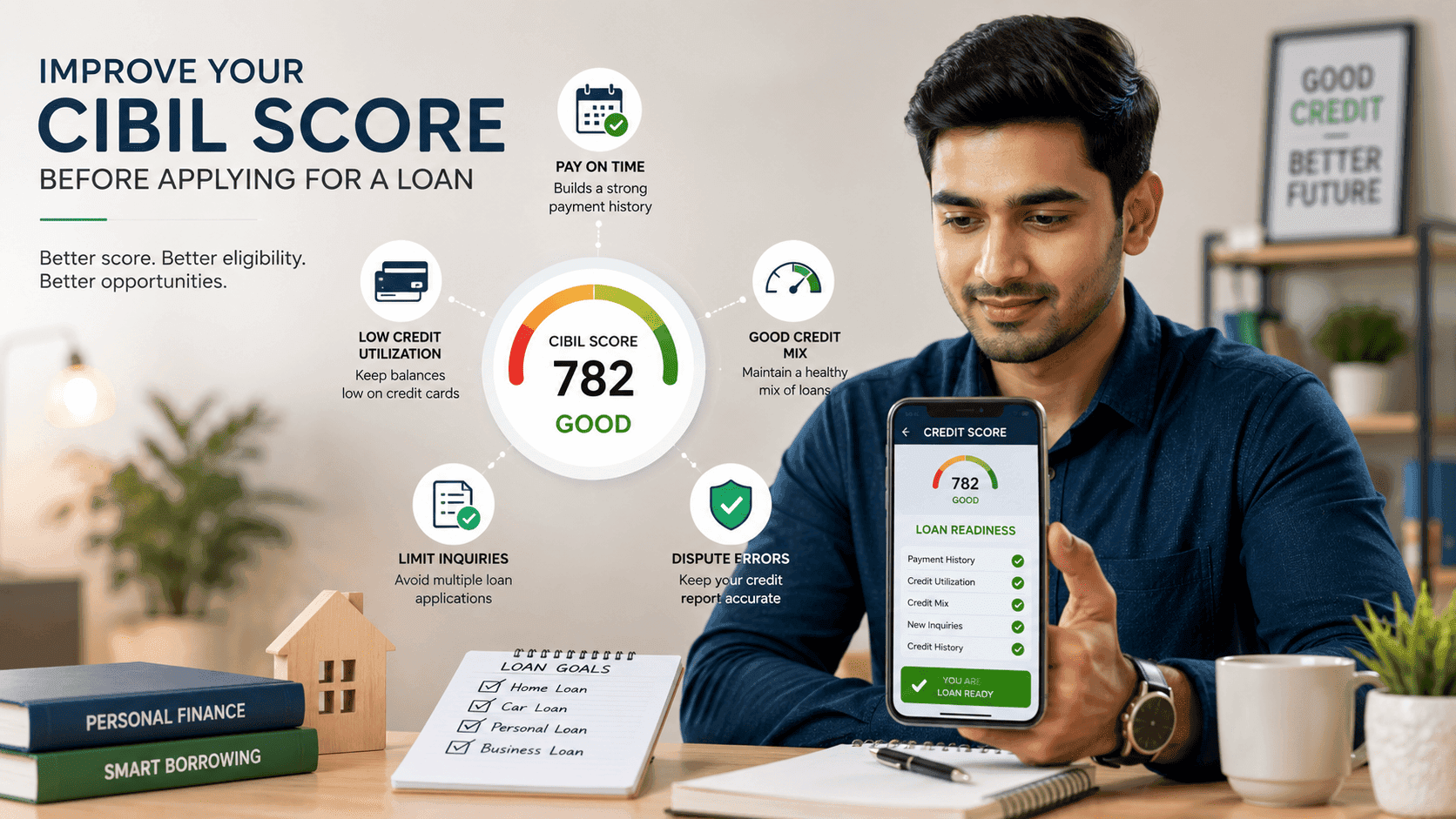
The Importance of Credit Score in Business Lending
Promoter credit scores remain one of the earliest filters in underwriting.
General benchmarks include:
Credit Score | Typical Interpretation |
|---|---|
800+ | Excellent |
750–799 | Strong |
700–749 | Acceptable |
650–699 | Weak |
Below 650 | High Risk |
Poor credit scores do not always prevent approvals but usually reduce borrowing capacity or increase pricing.
Sector-Specific Lending Calculations
Different industries operate with different economics.
As a result, lenders evaluate them differently.
Manufacturers
Manufacturers generally receive favorable treatment because they own productive assets and generate predictable operating cash flows.
Lenders evaluate:
Plant and machinery value
Capacity utilization
Order book position
Inventory cycles
Raw material dependency
Export exposure
Manufacturers often qualify for:
Term loans
Working capital facilities
Machinery finance
Export finance
Distributors and Traders
Distribution businesses usually operate on lower margins but higher volumes.
Lenders focus heavily on:
Inventory turnover
Debtor days
Supplier relationships
Customer diversification
Stock quality
Working capital financing plays a major role in this segment.
Service Companies
Service businesses often have fewer assets but stronger margins.
Banks evaluate:
Client contracts
Recurring revenue
Customer concentration
Employee dependency
Revenue predictability
Technology companies, consulting firms and agencies often fall into this category.
Professionals
Professionals such as doctors, architects and chartered accountants are assessed differently.
Lenders focus on:
Practice vintage
Professional qualifications
Annual receipts
Client base stability
Office ownership status
Professional loans often receive simplified underwriting models.
New Businesses and Startups
New businesses present the greatest challenge because historical financial performance is limited.
Lenders therefore emphasize:
Promoter experience
Capital contribution
Business model viability
Industry opportunity
Collateral availability
Traditional banks usually prefer businesses with at least two to three years of operating history.
NBFCs and fintech lenders may be more flexible.
Working Capital Loans vs Term Loans
Eligibility calculations vary according to loan type.
Working Capital Loans
Primarily based on:
Inventory levels
Receivables
Operating cycle
Monthly turnover
Term Loans
Primarily based on:
Profitability
Cash flow generation
Debt servicing ability
Asset creation potential
The same business may qualify for different amounts under each product category.
Why Loan Offers Differ Between Lenders
Business owners are often surprised to receive very different offers from different institutions.
This happens because lenders assign different weights to:
GST performance
Banking history
Industry risk
Promoter profile
Existing obligations
Collateral support
One lender may approve ₹75 lakh while another may approve ₹1.2 crore for the same business.
A Simple Framework to Estimate Your Borrowing Capacity
Before approaching lenders, businesses can perform a preliminary self-assessment.
Step 1
Calculate annual turnover.
Step 2
Determine EBITDA.
Step 3
Calculate annual debt obligations.
Step 4
Estimate DSCR.
Step 5
Review banking performance.
Step 6
Review GST consistency.
Step 7
Check promoter credit profile.
This exercise often provides a realistic estimate of borrowing potential.
Common Mistakes Businesses Make
Many applications become difficult because businesses:
Overestimate borrowing capacity.
Ignore promoter credit issues.
Delay GST filings.
Mix personal and business transactions.
Maintain irregular banking patterns.
Underreport profitability for tax savings.
Ironically, aggressive tax minimization strategies can reduce future loan eligibility.
Lower reported profits often translate directly into lower borrowing limits.
How Businesses Can Improve Eligibility Before Applying
Businesses planning expansion six to twelve months ahead should consider:
Improving banking discipline.
Reducing cheque returns.
Filing GST on time.
Reducing unsecured liabilities.
Strengthening profitability.
Maintaining accurate financial records.
Improving promoter credit scores.
Small improvements in these areas can significantly increase approved limits.
The Reality Behind Business Loan Calculations
There is no universal formula that determines business loan eligibility.
Lenders evaluate a combination of:
Revenue strength
Profitability
Cash flow stability
Debt obligations
Industry risk
Promoter quality
Banking behavior
Compliance history
Businesses that understand these variables enter lender discussions with realistic expectations and stronger negotiating positions.
Instead of asking, "How much loan can I get?"
The better question is:
"How much debt can my business comfortably support while continuing to grow sustainably?"
That answer is usually very close to the number the lender eventually approves.