

Introduction
Financial emergencies in India have become increasingly common in 2026—whether it’s medical expenses, sudden travel, home repairs, or managing existing debt. With digital lending apps, fintech platforms, and instant banking services expanding rapidly across cities like Delhi, Mumbai, Bengaluru, and Tier-2 towns, borrowing money has become faster than ever.
Two of the most common unsecured borrowing options are personal loans and credit card loans (including cash advances and EMI conversions). But choosing the wrong one can significantly increase your repayment burden.
So the real question is:
👉 Should you take a personal loan or use your credit card for urgent funds in India?
Let’s break it down in a practical, India-specific context for 2026.
What is a Personal Loan?
A personal loan is an unsecured loan offered by banks and NBFCs such as HDFC Bank, ICICI Bank, State Bank of India, and fintech lenders.
Key Features:
No collateral required
Fixed interest rate (typically 10%–24% per annum in India, depending on credit score)
Fixed EMI repayment schedule
Loan tenure: 1 to 5 years
Lump-sum disbursal
Common Uses:
Medical emergencies
Wedding expenses
Home renovation
Debt consolidation
Education or travel
What is a Credit Card Loan?
A credit card loan in India usually refers to:
Credit card cash advances
EMI conversion of purchases
Pre-approved instant credit offers from banks
Banks like Axis Bank, Kotak Mahindra Bank, and others offer instant credit facility on cards.
Key Features:
Instant access to funds
No additional documentation
Interest charged from day one (for cash advances)
Higher interest rates than personal loans
Flexible repayment (via EMIs or minimum dues)
Interest Rate
Personal Loan: 10%–24% (lower and fixed)
Credit Card Loan: 24%–42%+ (very high, revolving interest)
Approval Speed
Personal Loan: 1–48 hours depending on bank
Credit Card Loan: Instant approval
Loan Amount
Personal Loan: Higher (up to ₹50 lakh+)
Credit Card Loan: Limited to credit limit
Repayment Style
Personal Loan: Fixed EMI schedule
Credit Card Loan: Flexible but risky minimum due trap
Interest Rate Reality in India (2026 Insight)
In India’s evolving lending ecosystem:
Personal loans are becoming more competitive due to digital underwriting and RBI-regulated lending norms.
Credit card loans remain significantly expensive due to revolving credit structure.
Example:
₹1,00,000 personal loan at 14% interest → predictable EMIs over 3 years
₹1,00,000 credit card cash advance at 36% interest → can become debt trap if unpaid quickly
This makes personal loans more financially stable for medium to large borrowing needs.
When Personal Loan is Better
A personal loan is usually the smarter option if:
1. You need a large amount
Example: ₹1 lakh to ₹10 lakh+
2. You want predictable EMIs
Fixed repayment helps in budgeting.
3. You are consolidating debt
Many Indians use personal loans to pay off multiple credit card dues.
4. You have good credit score (750+)
Better score = lower interest rate.
5. You want long repayment tenure
Up to 5 years makes EMIs manageable.
When Credit Card Loan is Better
Credit card loan works better when:
1. You need instant money (emergency)
Example: medical emergency at night in Delhi or Mumbai
2. Small short-term requirement
₹5,000 to ₹50,000 range
3. You can repay quickly
Within 30–45 days or next billing cycle
4. No time for documentation
No income proof, no approval delay
Hidden Risks You Must Know
Credit Card Loans Risks:
Very high interest accumulation
Daily compounding in some cases
Minimum due trap increases long-term debt
Impact on credit score if mismanaged
Personal Loan Risks:
Longer commitment period
Foreclosure charges in some banks
Over-borrowing temptation
India-Specific Trends in 2026
1. Rise of digital lending apps
Fintech platforms now offer instant personal loans within minutes using Aadhaar-based KYC.
2. RBI tighter credit regulations
The Reserve Bank of India has increased focus on responsible lending and credit transparency, reducing predatory lending practices.
3. Credit card usage growth in metro cities
Cities like Delhi NCR, Bengaluru, and Hyderabad show rising credit card dependency for short-term liquidity.
4. Tier-2 & Tier-3 adoption
Smaller cities increasingly rely on personal loans via mobile banking instead of traditional banks.
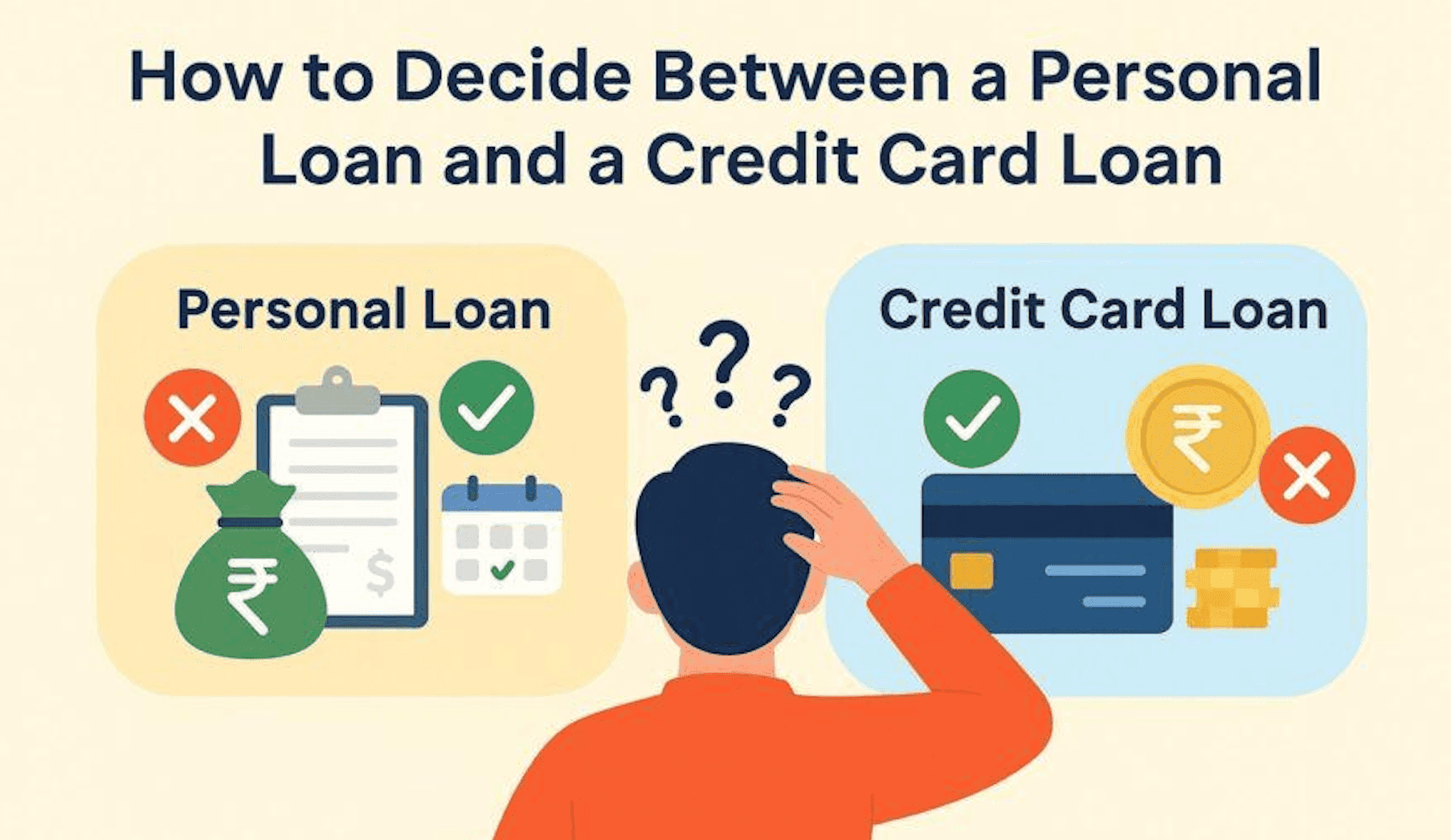
Practical Decision Framework (2026)
Choose based on this simple rule:
Need money fast + small amount + short time → Credit Card Loan
Need money large + structured repayment + lower interest → Personal Loan
Conclusion
In 2026 India’s fast-growing credit ecosystem, both personal loans and credit card loans serve important roles—but they are designed for different financial needs.
Personal loans are better for structured, large, and planned borrowing
Credit card loans are suitable for short-term, urgent, and small expenses
If used wisely, both can be powerful financial tools. If misused, both can lead to debt stress.